
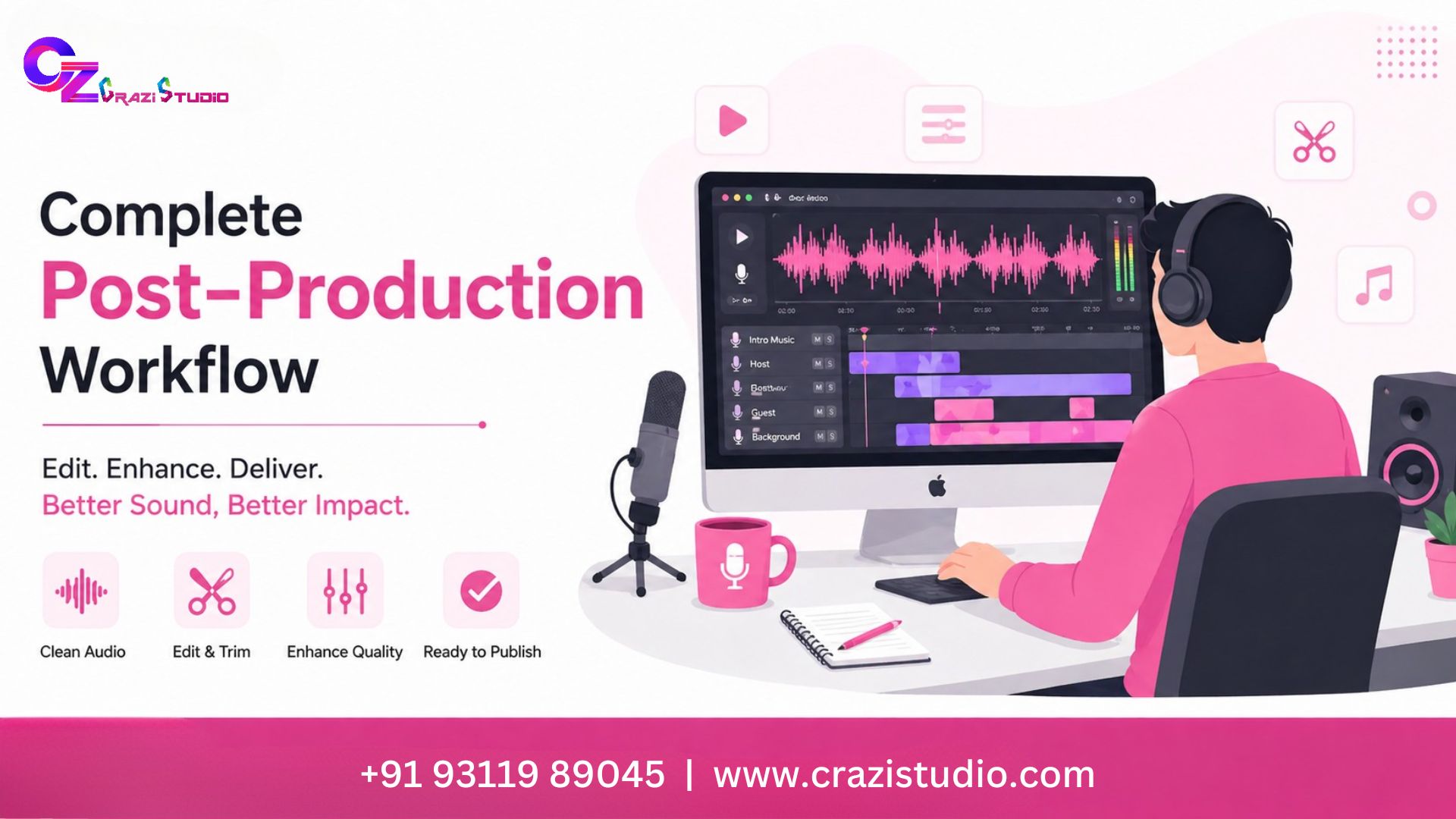
You just finished recording your podcast episode. You take a breath. You think the hard part is done. But here’s the truth: it’s just beginning. This is where post-production happens. Post-production is everything that happens after you stop recording. It’s the time between hitting “stop” and having something people actually want to listen to. It’s not glamorous. It’s not exciting. But it’s absolutely necessary.
Think of it like cooking. Recording is buying the ingredients. Post-production is actually making the meal. Nobody eats raw chicken and potatoes. You have to prepare them, season them, and cook them right. That’s what post-production does for your podcast.
Imagine listening to a podcast where the host sounds like they’re talking through a blanket. There are weird pauses where nobody says anything for five seconds. Sometimes they sound far away, sometimes too loud. Background noise from traffic keeps popping in and out. That’s a podcast without proper post-production.
Now imagine the same content, but everything sounds clear. The voice is even throughout. There are no weird silences. Background noise is gone. You can focus on what the person is actually saying instead of being distracted by bad audio. That’s post-production working. Your listeners judge your podcast in the first 30 seconds. If it sounds bad, they leave. If it sounds good, they stay and listen. Post-production is what makes them stay.
After recording, put everything in one place. Create a folder for the episode. Put all the audio files there. This saves hours later. You know where everything is and don’t waste time searching for clips.
Listen to the entire recording. Write down problems:
This listening session is your roadmap for post-production.
Now you start editing. This is where you remove the bad parts.
You cut out:
The goal is simple: keep only the good stuff. Your listeners don’t need to hear you thinking. They don’t need to hear mistakes. They don’t need 10-second silences. This step makes your podcast shorter and tighter. People can actually follow what you’re saying.
This is where post-production gets technical, but it’s not complicated.
Most podcasts have issues with sound:
During post-production, you fix these things. You turn down the background noise so it doesn’t distract people. You balance the volume so everyone sounds about the same level. You make sure the voice is clear and easy to understand. You don’t need to make the audio sound like a professional studio recording. You just need to make it sound clean and even.
Music matters. A good intro song sets the mood for your episode. Background music during credits makes the ending feel intentional. Sound effects can help mark transitions between topics.
But here’s the rule: don’t overdo it. The podcast is about your voice and your content. Music should support that, not compete with it. Keep it simple. Keep it clean. You want listeners to focus on what you’re saying, not on how cool the sound effects are.
If you’re recording video, add captions so people can watch without sound. Add simple graphics like title cards between sections. Keep it simple. The person talking is the star, not the graphics.
Before you’re done with post-production, listen to the whole episode again. This is your final check. Does everything sound good? Are the levels even? Did you catch all the mistakes? Does the music volume work? If you added graphics, do they look right?
This is when you catch the things you missed the first time. Fix them now before you move on to the next step.
Now you save your cleaned-up podcast in the right format. For audio, you need a format that works with podcast hosting. For video, you need a format that works on your platform.
Your hosting company will tell you exactly what they need. Just make sure you export in that format so your episode works perfectly when people try to play it.
A one-hour podcast episode typically takes three to five hours of post-production work. A 30-minute episode takes about two to three hours. Some episodes need more work. Some need less. It depends on how clean the recording is and how much editing is needed.
The point is: post-production takes real time. Plan for it. Don’t rush through it. The time you spend here directly affects how many people will stick around and listen to the next episode.
A podcast with bad post-production sounds rough. People turn it off after two minutes. They don’t come back. A podcast with good post-production sounds clean and professional. People listen all the way through. They come back for the next episode. They tell their friends about it.
The content might be the same. The person talking might say the same things. But post-production changes everything.
Post-production isn’t the exciting part. It’s quiet work. Behind the scenes. Nobody notices when it’s good. They only notice when it’s bad. But that’s exactly why it matters. Good post-production feels invisible. The listener just hears a clear voice and interesting content. They don’t think about all the work that went into making it sound that way.
That’s the goal. Do post-production right so well that nobody even realizes you did it. Focus on the basics: clean sound, tight editing, and even volume. That’s all you need. That’s what keeps people listening.


