
When you listen to a podcast on your phone or in your car, you probably don’t think much about how the sound is made. But creators are thinking about it a lot these days. The way podcasts sound is called Podcast Formatting in 2026, and it matters more than it ever did before. People who listen to podcasts no longer accept bad sound quality or boring audio. They want podcasts that sound clean, clear, and interesting. If you make a podcast or plan to start one, you need to understand how sound works. This guide will help you learn about the different ways podcasts are recorded and mixed.
A few years ago, podcasts were usually just someone talking into a microphone. Today, podcasts are everywhere. They are on music apps, video platforms, and smart devices. People listen while driving, working out, cooking, or getting ready for bed. Because of this, podcast creators have to think more carefully about how their shows sound.
The sound of your podcast is one of the first things a listener notices. If it sounds bad, people will stop listening after a few minutes. If it sounds good, they will keep listening and maybe even tell their friends about it. This is why Podcast Formatting in 2026 is so important for both new and experienced creators. Good sound quality makes people want to listen, and that helps your podcast grow.
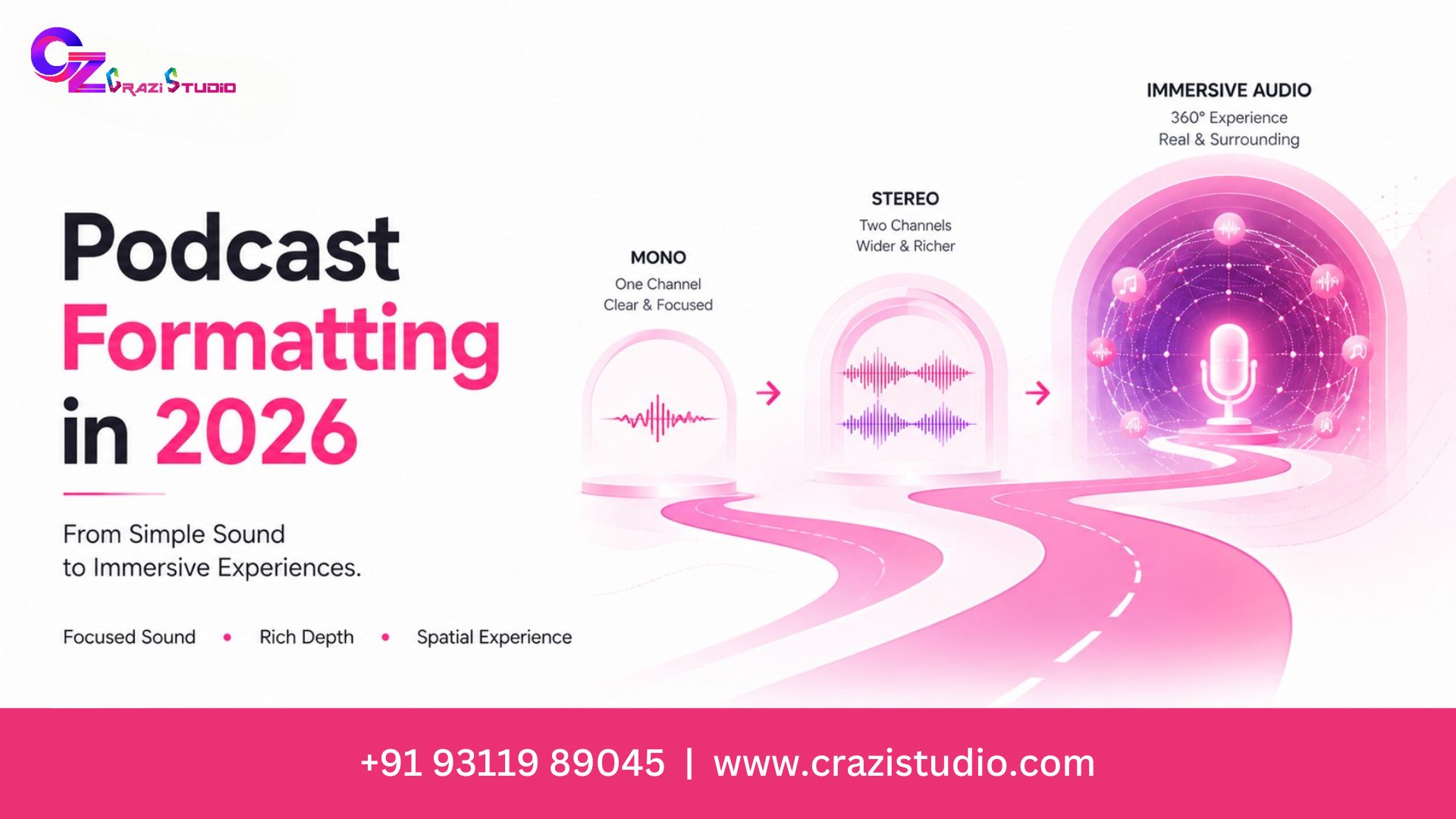
Podcasts use three main ways to record and deliver sound to listeners. The first way is called mono. The second way is called stereo. The third way is called immersive audio. Each one is different, and each one sounds different to the person listening. Let me explain what each one does. Mono is the simplest way to record sound. When you use mono, both your left ear and your right ear hear the exact same thing. It is like having one single speaker in the middle of the room. Mono has been used for podcasts for a very long time. Many popular podcasts that have been around for years still use mono. It is cheap to make, it does not take up much space on computers or phones, and it works on every device that exists. If you listen to a mono podcast in a fancy car or on a cheap phone speaker, it will sound about the same.
Stereo is different. With stereo, you have two separate sounds. One comes from the left and one comes from the right. If you listen with headphones, you can hear the difference. Sounds can seem to come from the left side or the right side or from somewhere in between. Stereo sounds more interesting and more real. Music sounds better, and you can put different sounds in different places. Stereo makes podcasts feel like they have more depth, like you are inside a real room instead of just hearing voices. Many podcast creators are switching to stereo now because people expect better quality. Immersive audio is the newest and fanciest way to record podcasts. Instead of just left and right, immersive audio creates a full three-dimensional experience. Sounds can feel like they are moving around you, above you, or behind you. If you are listening to a story, the sound might make you feel like you are actually standing in the place where the story is happening. Immersive audio is still not super common, but more creators are starting to use it for special projects and shows that tell stories.
Most podcasts are just people talking. Someone is the host, and maybe other people are guests. They talk about news, ideas, funny things, or serious topics. For these kinds of podcasts, mono is still the best choice. Why? Because when people talk, you want to hear their voices clearly and understand every word. Mono keeps voices centered and easy to hear. It does not matter if someone is listening on an old phone or new headphones. The voice will sound clean and clear.
Many business podcasts, news podcasts, and podcasts about personal improvement still use mono. These shows do not need fancy sound effects or background music. The talking is the most important part. When Podcast Formatting in 2026 is discussed by experts, they often say that mono is still perfect for interview shows and conversation shows. You can use mono and sound professional without spending a lot of money or making production complicated.
Some creators are now mixing mono for voices but adding a little bit of stereo for music and background sounds. This gives the show a little more interest without making it confusing. The voices stay clear and centered, but the music sounds richer. This is a smart middle ground between simple and fancy.
If your podcast tells stories, you probably want people to feel excited and interested. Stories work better when they have good sound effects, music, and environmental sounds. These things sound much better in stereo or immersive audio than they do in mono. When you hear a story in stereo with good music and sound effects, you feel like you are really there.
Imagine a podcast that tells a scary story. In mono, you hear the host talking and maybe some spooky sounds. In stereo or immersive audio, the sounds move around you. The monster might sound like it is behind you, then move to the side, then move in front of you. This makes the story much more exciting and scary. Creative podcasts, fiction shows, and branded content often use stereo or immersive audio because it makes people want to keep listening.
Storytelling podcasts that use better sound quality usually get more listeners and keep them listening longer. People remember how the podcast made them feel, not just what it said. Good sound helps make people feel emotions. This is why creators who make stories are willing to spend more time and money on sound quality.
Sound quality is important, but there are other things to think about too. Bigger audio files take longer to download and use more of a listener’s phone storage. Mono files are small. Stereo files are bigger. Immersive audio files are really big. If you make immersive audio files, some people might not want to download your podcast because it takes up too much space.
Different platforms also support different sound formats. Some platforms work perfectly with mono and stereo but might have problems with immersive audio. When you plan your podcast, you need to think about where people will listen and what format works on those platforms. You also need to think about how fast your podcast can upload and download.
This is why many successful podcasts think carefully about what format to choose. The best format is not always the fanciest format. The best format is the one that sounds good to your listeners and does not cause technical problems.
You can record a podcast by yourself in your bedroom if you want to. Many people do. But professional studios have better equipment and know more about how to make sound clean and balanced. A studio can help you avoid problems like background noise, weird echoes, and sound that is too quiet or too loud.
Professional studios also understand different sound formats and can help you choose the right one for your podcast. They know how to record voices in mono so they sound perfect. They know how to mix stereo so music and voices work well together. They can even help you try immersive audio if that is what you want.
If you are just starting out, you do not need to go to an expensive studio. But as your podcast grows, getting help from professionals can make your show sound much better and help you attract more listeners.
Technology is making it easier to create good-sounding podcasts. New software can automatically remove background noise, balance voices, and even create special sound effects. Computer programs can now do things that only expensive studios could do a few years ago. This is helpful for creators who do not have a lot of money.
However, technology is not magic. A computer program can make a bad recording sound a little better, but it cannot turn a bad recording into a professional recording. You still need to record good sound in the first place. You also still need someone to make creative choices about how to mix the sound and tell the story. Technology helps, but creative thinking and good recording still matter the most.
The format you choose should match what your podcast is about. If you make a podcast about news, politics, or business, mono is probably fine. It is simple, professional, and listeners can hear everything clearly. If you make a show that tells stories or you want to include interesting music and sound effects, stereo is a good choice. If you make a special podcast project and you want people to feel like they are inside the story, immersive audio might be worth trying.
Do not choose a format just because it sounds fancy. Choose the format that will make your listeners happy and that you can actually manage. You can always change later as you get better at making podcasts.
Podcast Formatting in 2026 is something that every creator should understand. Listeners have better headphones and better devices than they did before, and they expect podcasts to sound good. Whether you choose mono, stereo, or immersive audio, the important thing is to think about your listeners and what will make them happy. Sound quality is becoming a bigger part of what makes a podcast successful. Creators who spend time learning about sound and making their podcasts sound great will stand out. The future of podcasting belongs to people who care about how their shows sound.


